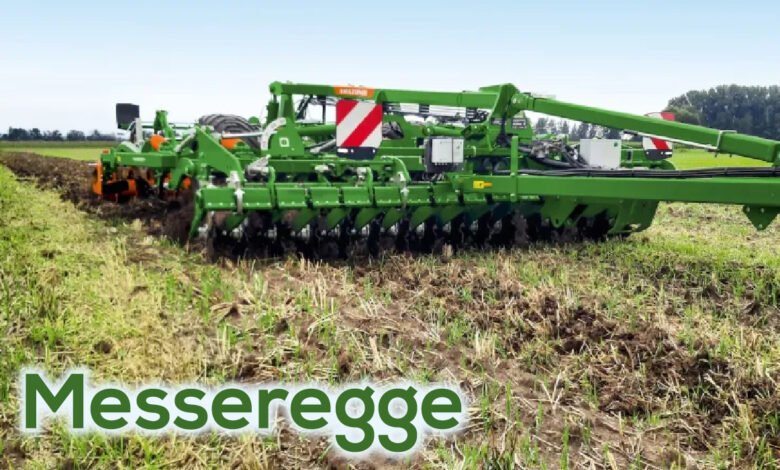
Messeregge is a German agricultural tool known as a knife harrow or blade harrow, used for shallow surface soil cultivation. It works by using sharp steel blades to slice through crop residue, break soil clods, and level the field. Farmers commonly use it to prepare seedbeds and manage plant remains efficiently. Messeregge is a knife-based agricultural harrow designed to slice soil surfaces, manage crop residue, and prepare seedbeds with minimal soil disturbance.
Introduction
Messeregge is a term that has started appearing more frequently in agricultural discussions and online searches. Many people encounter the word while researching farming equipment, soil cultivation methods, or German agricultural terminology. Because it is not a common word in everyday language, readers often want to understand what it means and how it relates to modern farming tools. Farmers, agricultural students, and equipment buyers may search for this term when exploring new ways to improve soil preparation and crop management.
Another reason people search for Messeregge is curiosity about unfamiliar words that appear in technical discussions. When people see a term that is not widely known, they naturally want to learn more about it. Online searches related to the topic often include phrases such as Messeregge meaning, Messeregge farming tool, what Messeregge is used for, and Messeregge translation. These search queries show that users want a clear explanation of the term and how it is used in agriculture.
This article will provide a complete explanation of Messeregge so readers can fully understand the topic. It will explore the definition of Messeregge, its importance in agriculture, and how the tool works in real farming conditions. You will also learn about the benefits farmers gain from using it, the companies that manufacture similar equipment, and how the word sometimes appears in modern discussions. By the end of this guide, you will have a clear understanding of Messeregge and its role in modern soil management.
The Meaning of Messeregge
Linguistic Meaning of Messeregge
Messeregge is a German compound word, meaning it is formed by combining two separate words that together describe a specific tool. In this case, the word is created from two parts: “Messer” and “Egge.” Understanding these individual components helps explain the meaning of the term.
The word “Messer” translates to knife in English, while “Egge” means harrow, which is a farming implement used to break up and level soil. When these two words are combined, they create the term Messeregge, which literally means “knife harrow” or “blade harrow.”
Together, the term describes a type of soil cultivation implement that uses sharp blades to cut through soil and plant material. Unlike traditional harrows that pull or drag through soil, a Messeregge focuses on slicing the surface layer. This cutting action allows farmers to manage soil structure while minimizing disturbance to deeper layers of the ground.
Translation of Messeregge in English
In English agricultural terminology, Messeregge is often translated in several similar ways depending on the context and farming practices used in different regions. The most common translations include knife harrow, blade harrow, and sometimes cutting harrow.
These translations all describe the same basic concept: a cultivation tool equipped with sharp blades that cut through soil and crop residues. While the exact name may vary, the function of the equipment remains the same.
The reason translations vary is that farming terminology differs across countries and agricultural systems. Some regions prefer descriptive names such as blade harrow, while others categorize the equipment based on its function within soil cultivation systems. Regardless of the translation used, Messeregge always refers to a tool designed for precise surface-level soil cutting and preparation.
History and Development of the Messeregge
Early Soil Cultivation Tools
The development of the Messeregge can be better understood by looking at the history of soil cultivation tools. Early farmers relied on simple equipment such as wooden harrows, which were used to break up soil after plowing. These tools helped smooth the surface and prepare the ground for planting seeds.
As farming technology progressed, wooden harrows were replaced by more advanced tools like spike harrows and tine harrows. These implements used metal spikes or flexible tines to loosen soil and distribute crop residues across the field.
However, many farmers realized that aggressive soil disturbance could damage soil structure and lead to erosion. This led to the search for tools that could prepare soil efficiently without turning it too deeply.
Introduction of Blade Harrow Systems
To solve this challenge, agricultural engineers developed harrows equipped with sharp steel blades instead of flexible tines. These blades allowed the tool to cut through soil and residue rather than pulling it apart.
This innovation created a more controlled form of soil cultivation. Instead of heavily disturbing the soil, the blade system worked only on the top layer. The result was a smoother seedbed with less damage to soil structure.
This new approach eventually became known as the Messeregge, reflecting the tool’s knife-like cutting mechanism.
Adoption in European Agriculture
Messeregge tools became particularly popular in Germany, Austria, and other Central European countries. Farmers in these regions began using blade harrows as part of modern farming systems focused on efficiency and soil conservation.
In recent years, the tool has gained increased attention due to the growing popularity of conservation agriculture, which encourages minimal soil disturbance and improved soil health.
How a Messeregge Works
A Messeregge is designed with a sturdy frame structure that supports multiple cutting blades arranged in rows. These blades are made from hardened steel and are positioned to slice through the top layer of soil as the machine moves across the field. Farmers can usually adjust the working depth of the implement depending on soil conditions and farming goals.
Blade Cutting Mechanism
The blades on a Messeregge are designed to move through soil in a slicing motion. As the tractor pulls the tool across the field, the blades cut through crop residue, soil clods, and small weed roots.
This cutting action breaks apart large pieces of soil and distributes plant material evenly across the field surface. The result is a more uniform seedbed that improves planting conditions.
Surface-Level Soil Cultivation
One of the main advantages of a Messeregge is that it works only on the topsoil layer, usually between 2 and 5 centimeters deep. This shallow operation protects the deeper soil structure, which is important for maintaining healthy root systems and soil organisms.
Tractor Integration
Most Messeregge implements are attached to tractors. They can be front-mounted or rear-mounted, depending on the design and farming setup. Some farmers combine the tool with other implements so multiple tasks can be completed in a single pass across the field.
Main Agricultural Uses of Messeregge
Seedbed Preparation
Messeregge is widely used for seedbed preparation. The blades smooth the soil surface and create a consistent structure that helps seeds settle evenly into the ground. This improves seed placement and supports more uniform germination across the field.
Crop Residue Management
After harvest, fields often contain leftover plant material such as straw and stalks. The cutting blades of the Messeregge slice these residues into smaller pieces. This helps organic matter decompose faster and improves soil fertility.
Weed Control
Another important use of the Mes seregge is weed control. Because the blades cut through the shallow soil layer, they can destroy young weeds before they grow strong roots. This helps reduce weed competition without the need for excessive chemical herbicides.
Soil Leveling
Messeregge tools also help level uneven field surfaces. A smooth field improves planting accuracy and makes it easier for other farm equipment to operate efficiently.
Key Benefits of Using a Messeregge
Improved Soil Structure
Because the Messeregge works only on the surface layer, it avoids the deep soil disturbance caused by plowing. This helps maintain natural soil structure and supports beneficial microorganisms.
Fuel and Time Efficiency
Many farmers use Messeregge equipment to reduce the number of passes needed in a field. Fewer passes mean lower fuel consumption and reduced labor time, making farming operations more efficient.
Better Moisture Retention
Shallow soil cultivation helps retain moisture in the soil. By preserving deeper layers, the Mes seregge supports better water management and improved crop growth.
Compatibility with Modern Farming
Messeregge tools are widely used in conservation agriculture and precision farming systems. Their design allows farmers to prepare fields effectively while protecting long-term soil health.
Typical Design and Technical Specifications
Messeregge implements come in different sizes and configurations depending on the manufacturer and farming needs.
Working Width
Most blade harrows have working widths between 2.6 meters and 4 meters, allowing them to cover large areas efficiently.
Blade Material
The blades are usually made from hardened steel, which provides durability and resistance to wear. Some models also include special coatings to extend blade life.
Optional Equipment
Additional features may include packer rollers, leveling bars, and hydraulic adjustment systems. These components help improve soil finishing and allow farmers to adjust the machine easily during operation.
Messeregge vs Other Harrows
Messeregge vs Spring Tine Harrow
Spring tine harrows use flexible metal tines that pull through the soil. In contrast, the Mes seregge uses cutting blades that slice the soil surface. This difference results in less aggressive soil disturbance.
Messeregge vs Disc Harrow
Disc harrows use rotating discs to mix soil more deeply. Messeregge tools focus on shallow cultivation, making them better suited for residue management and surface leveling.
Messeregge vs Power Harrow
Power harrows rely on rotating mechanical parts driven by the tractor’s power system. Messeregge implements are simpler and often require less maintenance and lower operating costs.
Major Manufacturers of Messeregge Equipment
Several European agricultural equipment companies produce blade harrow systems.
Kerner Maschinenbau
Kerner is known for producing advanced soil preparation tools, including front packer and blade harrow systems designed for modern farming operations.
Fliegl Agro-Center
Fliegl manufactures durable agricultural machinery that supports efficient field preparation and residue management.
Dalandtechnik
Dalandtechnik specializes in equipment designed for different soil conditions, offering blade harrow systems suitable for both light and heavy soils.
Role of Messeregge in Modern Sustainable Farming
Modern agriculture increasingly focuses on sustainability and soil conservation. Farmers are encouraged to reduce deep soil disturbance and limit the number of tractor passes needed to prepare fields.
The Messeregge supports these goals by allowing farmers to perform efficient surface cultivation. Its blade system improves residue distribution, maintains soil structure, and helps create an ideal seedbed while protecting long-term soil health.
Mes seregge in Digital and Online Discussions
Occasionally, the word Messeregge appears online in discussions unrelated to agriculture. In some cases, people use the word metaphorically to refer to a core message or key idea within communication.
However, this usage is not widely accepted or documented in linguistic research. The primary and most accurate meaning of Messeregge remains its agricultural definition as a blade harrow tool.
Why Messeregge Is Not Common in Dictionaries
One reason Messeregge does not appear frequently in traditional dictionaries is that it is a specialized agricultural term. Many farming tools have names that are commonly used within the agricultural industry but are not widely known outside of it.
Language localization also plays a role. Because Messeregge is a German term, English dictionaries may prefer translated descriptions rather than listing the original word.
Future of Messeregge Technology
Agricultural technology continues to evolve, and tools like the Mes seregge are likely to improve over time. Manufacturers are working on better blade designs, improved durability, and more adjustable depth systems.
In the future, Messeregge equipment may also integrate with precision farming technologies, including GPS-guided tractors and smart farming systems that optimize soil cultivation automatically.
Tips for Farmers Considering a Messeregge
Farmers who are thinking about using a Messeregge should consider several practical factors. Soil type is important because heavier soils may require stronger blades or different machine configurations.
Tractor power should also be compatible with the working width of the implement. Proper blade maintenance is essential as well, since sharp blades ensure efficient cutting and longer equipment life.
Key Takeaways About Mes seregge
-
Messeregge means knife harrow or blade harrow
-
It is used for shallow soil cultivation
-
The tool helps manage crop residues and prepare seedbeds
-
It supports modern sustainable farming practices
Conclusion
Messeregge is an important agricultural implement that plays a valuable role in modern soil management. By using sharp blades to cut through surface soil and crop residues, the tool allows farmers to prepare seedbeds efficiently while preserving deeper soil structure. This approach supports healthier soil, better moisture retention, and improved crop growth.
The Messeregge represents an important innovation in farming equipment because it combines efficiency with sustainability. Farmers can reduce fuel consumption, complete field preparation faster, and maintain long-term soil health by using this type of blade harrow.
Although the term may not be widely known outside agricultural communities, its practical value makes it an essential tool in many modern farming systems. As agricultural technology continues to develop, tools like the Messeregge will likely remain important for farmers who want to balance productivity with responsible soil management.
FAQs
What is Messeregge in agriculture?
Messeregge is a German agricultural tool called a knife harrow or blade harrow. It is used for shallow soil cultivation, residue cutting, and seedbed preparation. The tool uses sharp blades to slice the soil surface, helping farmers prepare fields while causing minimal disturbance to deeper soil layers.
What does the word Messeregge mean?
The word Messeregge comes from German. It is made from two words: “Messer,” meaning knife, and “Egge,” meaning harrow. Together, the term literally means “knife harrow,” which describes a farming implement designed to cut the top layer of soil.
What is a Messeregge used for?
A Messeregge is used for several important farming tasks. These include seedbed preparation, cutting crop residues, controlling small weeds, and leveling the soil surface. Farmers use it to improve soil conditions before planting crops.
How deep does a Messeregge work in the soil?
A Messeregge usually works at a shallow depth of about 2 to 5 centimeters (1–2 inches). This shallow cultivation helps maintain soil structure while still breaking surface clods and residues.
Why do farmers use Messeregge instead of traditional harrows?
Farmers use Messeregge because it cuts soil gently instead of aggressively disturbing it. This helps protect soil health, reduce fuel usage, and support modern farming methods such as conservation agriculture and precision farming.